
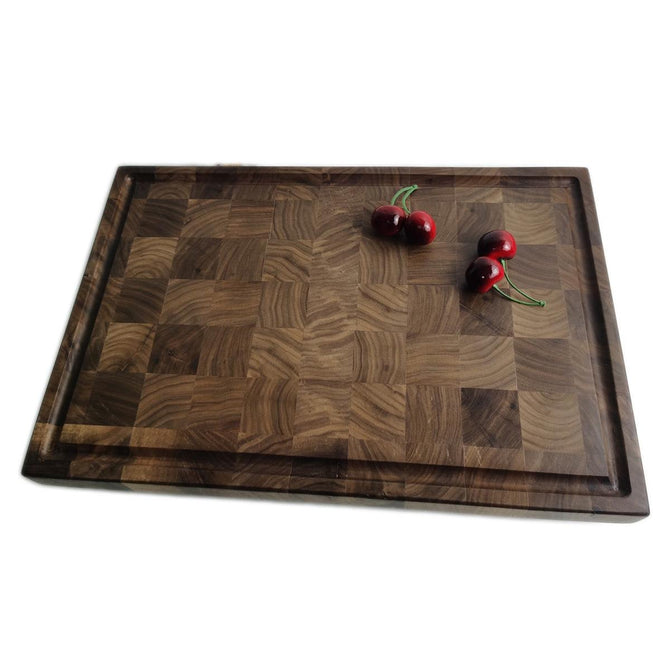
In any kitchen, the tools and accessories one chooses can make a significant difference in both the functionality and aesthetics of the space. Among these essential tools, cutting boards play a pivotal role. While there are numerous materials and styles available, the walnut end grain cutting board stands out as a quintessential choice for both professional chefs and home cooking enthusiasts. This article explores why these boards are a kitchen essential, offering insights into their durability, aesthetic appeal, and practical benefits.
The Unique Construction of Walnut End Grain Cutting Boards
The construction of a walnut end grain cutting board is what sets it apart from other types of cutting boards. The end grain orientation, wherein the wood fibers are arranged vertically, presents a unique set of benefits:
- Self-Healing Properties: The vertical grain allows the fibers to close back together after a cut is made, giving the board a self-healing property.
- Knife-Friendliness: The softer surface is gentle on knife blades, preserving their sharpness over time.
- Enhanced Durability: The construction method enhances the board’s ability to withstand heavy use without significant wear.
Why Walnut Wood is a Preferred Choice
Walnut wood has long been favored in the culinary world for its blend of beauty and robustness. Here are the key reasons why walnut is a superior choice for wooden chopping boards:
- Rich Aesthetic: The deep, rich color of walnut wood adds an elegant touch to any kitchen.
- Natural Antibacterial Properties: Walnut contains natural compounds that minimize bacterial growth, ensuring food safety.
- Environmental Sustainability: Responsibly sourced walnut wood supports eco-friendly practices.
Comparing Different Types of Grain Orientation
The choice between different grain orientations can impact the performance and longevity of a cutting board. Let’s compare some popular types:
End Grain vs. Edge Grain
While both end grain wood cutting board and edge grain cutting boards are popular, the former is known for its superior self-healing abilities and aesthetic appeal. Edge grain boards, with their horizontal grain orientation, tend to be less expensive and are often lighter, making them easier to maneuver.
End Grain vs. Face Grain
A face grain cutting board is another variant, oriented with the wood’s face or surface as the cutting surface. While this type offers a smooth texture, it is generally less durable under heavy chopping compared to end grain boards.
Practical Benefits in the Kitchen
In addition to their structural and aesthetic advantages, walnut end grain cutting boards offer practical benefits that make them indispensable in the kitchen:
- Versatility: Suitable for various tasks, from chopping vegetables to serving cheese and charcuterie.
- Stability: Heavier than other boards, they provide a stable surface, reducing the risk of accidents.
- Long Lifespan: With proper care, these boards can last a lifetime, making them a worthy investment.
Caring for Your Walnut End Grain Cutting Board
Proper maintenance is essential to maximize the lifespan of a butcher block cutting board made of walnut. Here are some care tips:
- Regularly oil the board with food-grade mineral oil to maintain its moisture and prevent cracking.
- Avoid prolonged exposure to water; always dry the board immediately after washing.
- Use a dedicated board for raw meats to prevent cross-contamination.
In conclusion, the walnut end grain cutting board is more than just a tool; it’s an investment in quality and craftsmanship that enhances culinary experiences. Whether one is a seasoned chef or a home cook, incorporating this essential piece into the kitchen can elevate both the functionality and the ambiance of the space.