
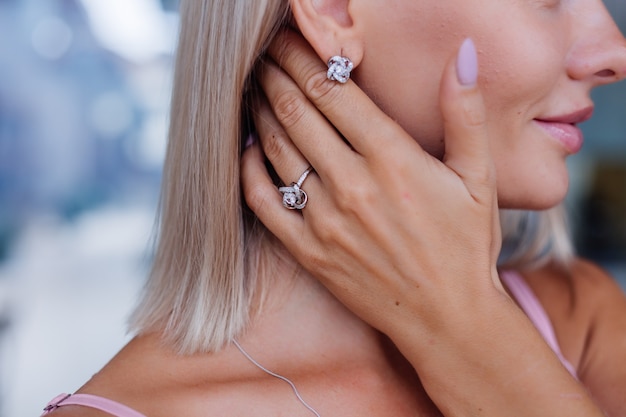
Choosing a diamond engagement ring is a significant milestone for any couple. It symbolizes love, commitment, and the start of a new chapter in life. With myriad options available, selecting the perfect ring can be overwhelming. This guide aims to simplify the decision-making process by highlighting key factors to consider when choosing a diamond engagement ring. From understanding the 4Cs to selecting the right setting, this article will provide a comprehensive overview to help you make an informed choice.
Understanding the 4Cs of Diamonds
The 4Cs”?cut, color, clarity, and carat weight”?are the standard criteria for evaluating a diamond’s quality and value. Understanding these can aid in selecting a diamond engagement ring that fits personal preferences and budget.
Cut
The cut of a diamond significantly impacts its brilliance. It refers to how well a diamond’s facets interact with light. A well-cut diamond will reflect light more effectively, making it appear more vibrant and dazzling.
- Excellent: Reflects nearly all light that enters the diamond, creating optimal sparkle.
- Very Good: Reflects most light, providing a high level of brilliance.
- Good: Reflects a sufficient amount of light, offering a decent sparkle.
- Fair and Poor: Reflects minimal light, resulting in less brilliance.
Color
Diamonds are graded based on their color, or lack thereof. The grading scale ranges from D (colorless) to Z (light color). Colorless diamonds are considered the most valuable due to their rarity.
- D-F: Colorless
- G-J: Near colorless
- K-M: Faint color
- N-R: Very light color
- S-Z: Light color
Clarity
Clarity measures the presence of internal or external imperfections, known as inclusions and blemishes. The fewer the imperfections, the higher the clarity grade and value.
- FL-IF: Flawless to Internally Flawless
- VVS1-VVS2: Very, Very Slightly Included
- VS1-VS2: Very Slightly Included
- SI1-SI2: Slightly Included
- I1-I3: Included
Carat Weight
Carat weight measures the diamond’s size. While larger diamonds are often more desirable, the other three Cs should not be overlooked. A well-balanced combination of cut, color, and clarity can enhance a diamond’s overall appearance.
Choosing the Right Setting
The setting of an engagement ring is crucial as it holds the diamond in place and contributes to the ring’s overall style. There are various settings to consider based on personal taste and lifestyle.
Popular Settings
- Prong: A classic setting that uses small claws to hold the diamond, allowing maximum light exposure for added brilliance.
- Bezel: Surrounds the diamond with a metal rim, providing a secure and modern look.
- Pav??: Features small diamonds set closely together along the band, enhancing sparkle.
- Halo: Surrounds the central diamond with a circle of smaller stones, amplifying its size and radiance.
Considering Budget and Personal Style
While understanding the 4Cs and choosing the right setting are essential, budget and personal style should guide the final decision. Selecting a diamond rings for women that aligns with the intended wearer’s taste ensures the ring is cherished for years to come.
Budget Considerations
It is crucial to establish a budget before starting the search. Fortunately, a beautiful diamond engagement ring can be found at various price points by balancing the 4Cs according to priority.
- Opt for a lower carat weight with higher cut quality for better sparkle.
- Consider near-colorless diamonds to achieve a balance between appearance and cost.
- Choose a setting style that enhances the diamond’s perceived size without increasing the budget significantly.
Ultimately, the perfect diamond engagement ring is one that captures the essence of the relationship it represents. By following this guide and considering each aspect carefully, selecting a ring that symbolizes lasting love becomes an enriching experience.